
Detail
(1 seat open)
Uganda is a truly wonderful place that will capture anyone’s heart as soon as they step off the plane. You’ll be greeted with wide white smiles from the locals and also greeted by an exceptional amount of wildlife! Uganda is one of the few countries where not only can you witness the Critically Endangered Mountain Gorillas in their natural environment but also where you can see an Endangered Chimpanzee troop in the wild. Uganda also (luckily for us birders), is home to a huge bounty of birdlife! Uganda has only one true endemic bird species, the Fox Weaver, but don’t let that fool you; it is also blessed with having an impressive 23 endemic Albertine species as well as having over 1082 bird species in total! It’s also the best place in the world to see the prehistoric and fascinating-looking Shoebill – one for any birder’s wish list! No country beats Uganda when it comes to bird watching. Within just 241,040 km², there are more than 1084 bird species that have been recorded. The country has varied environments where you can go birding: savanna grasslands, swamps and wetlands, tropical rain forests, mountainous places, and more. While in Uganda, you can even see a good number of birds just from your courtyard! On a single birding safari through Uganda, you can see over 600 birds – this is terrific!
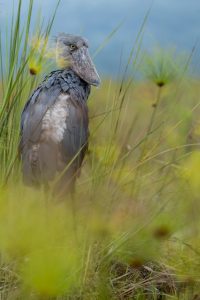 One of the best places on earth that has a huge collection of animals in Africa. This is because of the terrain that includes rich savannah grasslands, deserts, rain forests, wetlands, and a lot more. Uganda being the Pearl of Africa makes it an ideal place to be close to nature and if you love birds, why don’t you go on bird watching in Uganda. Uganda is one of the best birding destinations in the world. With over 1065 bird species condensed in a small country, Uganda is a rewarding destination. While other East African Countries are famous for wildlife safaris, many naturalists would affirm that Uganda offers an experience that is more diverse, exceptional, and breath-taking. There are a billion reasons as to why one should bird in Uganda; the numbers speak for themselves. More than 1065 bird species are found in Uganda. There are many varied habitats that can be reached in a day and many different birds are spotted. It’s not uncommon for a week-long itinerary to produce a trip list for less than 500 bird species. Rare birds such as the Shoebill can be easily spotted in Uganda, Uganda being so close to the equator, there is little difference in temperature year round with no real winter or summer. However, the hottest months, Uganda’s ‘summer’ are in the months of January to February when the average daytime range is 24-33°C (52-91°F) with peaks of up to 40°C/104°F in the far north. The south has two Wet seasons: from mid- September to November and March to May. The Dry season from December to February means only that it rains less and the gorilla parks remain fairly wet during these months. The second Dry season – from June and July – is considerably drier. Still, with 1,000 to 2,000mm (39.4-78.7in) of rain every year, it can rain at almost any time. The north, including Murchison Falls and Kidepo Valley, has one continuous Wet season from March to November and a more obvious Dry season from December to February.
Tour starts from: Entebbe International Airport
Trip End in: Entebbe International Airport
Number of Days: 15 Days
Number of Nights: 14 Nights
Tour starting date: 08/11/2027
Tour ending date: 22/11/2027
Tour Type and Focus: Photographing Birds & Mammals, Landscape, Culture
Type of Accommodation: Mid-range
Meal Plan: Breakfast, Breakfast, Lunch, Dinner (Full Board)
Tour Pace: Easy
Tour Treks: Easy to Moderate to Hard
- Rhinos trek is an easy walk on mostly level terrain
- Chimpanzee trek is mostly easy to moderate. There is some elevation change, and the length is not typically very long. This is typically between easy and moderate.
- Mountain Gorilla treks can range from easy to hard. This depends on the gorilla troop assigned by the rangers and where they are located. Typically, our groups have older people. They tend to weigh factors such as age and physical ability. In general, the hike is through the woods, across streams, and has some elevation changes. Once we get closer to the gorillas, the vegetation is dense, and the terrain is typically steep. They also offer a lift for approximately $300. They will carry you on a platform chair as far as they can reach. In general, they can probably take you until the terrain gets pretty steep, which is typically closer to the gorillas.
Physical Difficulty: Easy
Photographic Difficulty: Easy
Number of Clients: 03
Rooming Category: Single rooms
Photography will be taken from: In the Vehicle, on foot, and in the Boat
Type of Vehicle: 4×4 Wheel Extended Land Cruiser Jeep
- A diverse safari timed to coincide with the ‘Wildlife Safari experience and birding Photography’
- High likelihood of rare wildlife experience and photographs
- Photographing the Shoebill, the most sought-after bird
- Excellent birding throughout
- High-quality lodges with a leading East African Bird guide Specialist
- Guided by a professional Nature Photographer and Bird Guide
- Exciting Photos of the Albertine endemic rare birds
Highlight mammals
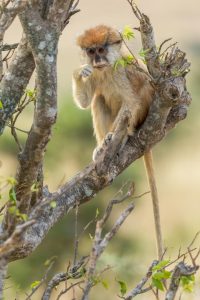 Lion, Leopard, Buffalo, Elephant, Hippo, White Rhino, Giraffe, Topi, Spotted Hyena, Elands, Mountain Gorillas, Chimpanzee, Giant Forest Hog, Blue Monkeys, De Braza’s Monkey, Patas Monkey, Bush Buck, Nile Crocodiles
Habitats covered
Equatorial forest, Wetlands, Savannah, Highland Forest, Albertine Rift Mountains, Semi-arid Scrubland, Lakes, Farmland, Woodland
Rift Valley Endemic Birding Photography |Gorilla Tracking | Big Five Photos | Wildlife and Scenery I Chimpanzee Tracking I
This tour is set to cover the unique habitats of the Uganda the Pearl of Africa. These habitats are home to the region’s most unique and restricted-range species. We intend to cover the Great Albertine Rift for the montane forest birds and other wildlife, the mid-elevation birds at Budongo Forest, Bwindi Impenetrable, Mabamba Bay Swamp, Queen Elizabeth National Park, Kibale Forest National Park, Semuliki National Park, Lake Mburo National Park, Murchison Falls National Park, Ziwa Rhino Sanctuary. Although, there will be montane habitat coverage, the pace should be generally easy.
Key Bird Species
Special Bird Species on this Exciting Uganda Birding Dream Photography: Shoebill, African Finfoot, Red-throated bee eater, Regal Sunbird, Papyrus Gonolek, Narina & Bar-tailed Trogon, Handsome francolin, Black bee eater, saddle-billed stork, Northern Carmine bee eater, Great Blue Turaco, Ross’s Turaco, Crested Barbet, Red-faced Barbet, Grauer,s Broadbill, Green-breasted Pitta, Regal sunbird, Strange weaver, dusky Twinspot, yellow bishop, black-throated seed-eaters, Shelly;s Crimsonwing, African pied hornbill, Black dwarf hornbill, Black-casqued hornbill, Black-throated coucal, Blue-billed malimbe, Blue-breasted kingfisher, Blue-headed flycatcher, Chestnut-breasted nigrita, Congo serpent eagle, Crested malimbe,
Day 1 (Nov 08, 2027)
Arrival at Entebbe International Airport & the Hotel
Arrive at Entebbe International Airport meet and greet Kenneth, our guide, and thereafter transfer to the Hotel in Entebbe at Lake Heights Hotel Entebbe for overnight! This Hotel it is near the Airport it takes only about 10 minutes drive from the Airport. If you arrive early in Entebbe, we shall go and photograph birds at Botanical Gardens.
Day 2 (Nov 09, 2027)
Transfer to Murchison Falls National Park & Birding En-route
After an early morning breakfast, transfer to Murchison Falls National Park, here you will do the longest drive of the trip; is seven birding-drive hours away from Fort Portal. Depending on what will be missing on your list.
The few stops we should do along the way, are for a lunch stop and adding some very likely birds like Yellow-shouldered and Red-collared Widowbird, Brown Twinspot, Red-backed and Brown-backed Scrub-Robin. You will stop over en-route at the selected Hotel/Restaurant for Lunch in Hoima. After here we shall drive directly to Murchison Falls National Park
Viewing the top of Murchison Falls
When we arrive at the top of Murchison Falls where the park is bisected by the Victoria Nile. You will see below the boat trip along this atmospheric river brings you to the base of Murchison Falls, where the water squeezes through a narrow gorge before cascading down into the Devil’s Cauldron. Even more impressive is the view of this deafening cascade from the Top of the Falls. North of the river, a cover of rolling grassland is dotted with tall borassus palms. South of the river, the main habitat is dense woodland with forest patches.
We shall create time for the top of the Murchison Falls. These very dramatic falls are arguably the world’s most powerful. The bottom of the falls is great but the top is quite something! This is where the world’s longest river squeezes through a very narrow cleft of about eight feet and drops for a straight forty feet down! We never plan to miss this adventure on any of our tours that get to this part of the country and here we shall scan and photograph the rock pranticoles after here drive back to the lodge for overnight.
Day 3 (Nov 10, 2027)
Full Day Game Drive & Wildlife Photography in Murchison Falls National Park
The tour continues to Uganda’s largest national park, which is also at the lowest elevation amongst all other parks. Although the wildlife viewing is excellent in this park, it is the scenery that really gets to me. There are rolling grassy hills studded with borassus palms and teeming with plains animals, papyrus swamps inhabited by the sought-after…
Murchison Falls National Park supports four of the Big Five (only rhinos are absent). Buffalo and elephant are particularly common. A healthy lion population preys on the abundant Uganda kob. Despite being more secretive, leopards are seen with increasing frequency. Other antelope include oribi, Jackson’s hartebeest, defassa waterbuck, common duiker and bushbuck. The Victoria Nile River teems with crocodiles, hippos and waterbirds.
Day 4 (Nov 11, 2027)
Exciting Birding Photography in Murchison Falls National Park
Large herds of the localized Rothschild’s giraffe have long been a feature of the plains north of the Nile and now also occur farther south. Leopards, though far from numerous, are most likely to be seen in the vicinity of Pakuba Lodge. Troops of the localized patas monkey can play on the grassy plains north of the Nile, while the forested riverbank is home to black-and-white colobus.
we will scan the trees for Purple Starling. When we approach the escarpment’s thickets and wooded acacias, we will look for birds typical to this habitat. Northern Red Bishop, Beautiful Sunbird, White-fronted Black-Chat, Bronze-tailed, Violet-backed, and Lesser Blue-eared Starlings Whistling and Foxy Cisticola, Cinnamon-breasted Bunting, Black-faced Waxbill, Cliff Chat, Spot-flanked, Martial Eagle, Black-billed Barbet and hopefully acceptable looks at the shy Dusky Babblers.
This is the best time for Wildlife Viewing,….Murchison Falls NP offers good wildlife viewing throughout the year. But the best time is during the Dry season (December to February), when animals gather around the Victoria Nile and other reliable water sources. Our mammal list will aim for African Lions, the graceful Rothschild Giraffe, Lelwel’s Hartebeest, Oribi, Side-striped Jackal, and the shy Bohor Reedbuck, the northern part of the park and you will possibly be rewarded with good views of Heuglin’s Francolin, a central African endemic. On this day, you will aim to find some specialties of the Southern Sudan stretch and new lovely mammals that show up during an African safari. This is Uganda’s largest national park, impressive for both birds (over 450 species) and mammals (76 species). Many famous visitors, including Winston Churchill and Ernest Hemingway, explored here.
Many first learned of it from movie scenes in the film The African Queen, filmed here and starring Humphrey Bogart. Part of the park is on the shores of Lake Albert at the northern end of the Albertine Rift Valley. This is ecologically the most intact park in Uganda, with predators including leopards and lions.
Evening Game Drive in Buligi Areas
The evening drive on the plan takes us to what feels like the middle of nowhere. Imagine a spot where you are only surrounded by wildlife, a dark sky with only stars and the moon to pick out, with no surrounding light pollution. It is basically living your favourite wild animal’s moment. This is also one of our Avian Safaris guides’ favourite moments. Depending on the season. New mammals to look out for should include White-tailed and Marsh Mongoose, Bunyoro Grass Rabbit, Leopard, Blotched Genet, Slender Gerbils, Fat Mice, Spotted Hyena, among others.
You drive into the open Savannah of Uganda’s biggest National Park, covering the section north of river Nile. We should find Speckle-fronted Weaver, Red-necked Falcon, Red-headed, Cardinal and Red-billed Queleas, Denham’s Bustard, Black-headed Lapwing, Spotted Thick-knee, and the critically endangered and uncommon White-headed Vulture. Swallow-tailed and Northern Carmine Bee-eaters, Red-throated bee-eater, Cinnamon-chested bee-eater, European bee-eater,
Banded Martin, Scarce Swift, Senegal Coucal, blue-headed coucal, White-browed coucal, African Fish Eagle, African Jacana, Purple swamphen, Tawny Eagle, Heuglin’s Francolin, black-bellied bustard, Pale and Gambaga Flycatcher, Senegal Thick-knee and seasonal migrants. Our mammal list will aim for African Lions, the graceful Rothschild Giraffe, Lelwel’s Hartebeest, Oribi, Side-striped Jackal, and the shy Bohor Reedbuck
We shall create time for the top of the Murchison Falls. These very dramatic falls are arguably the world’s most powerful. The bottom of the falls is great but the top is quite something! This is where the world’s longest river squeezes through a very narrow cleft of about eight feet and drops for a straight forty feet down! We never plan to miss this adventure on any of our tours that get to this part of the country and here we shall scan and photograph the rock pranticoles after here drive back to the lodge for overnight.
Day 5 (Nov 12, 2027)
Boat Cruise on the Nile to the bottom of Murchison Falls
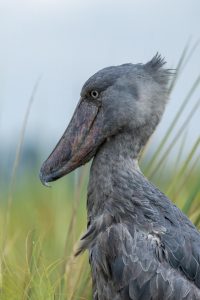 After a proper lunch by the banks of the mighty river Nile, you will take a three-hour boat ride to the bottom of Murchison Falls, an enjoyable on the Victoria Nile where you can find Giant Kingfisher, White-crested Turaco and Rock Pratincole at the bottom. Giant Kingfisher, Grey-headed Kingfisher, Grey-headed Bush-shrike, the spectacular-looking Saddle-billed Stork, Little Bittern and the Shoebill. With a little more effort, some days Pel’s Fishing-owl, White-backed and Black-crowned Night-Heron show up. This park has extensive savannah grasslands that give fantastic photography opportunities when the sun is setting. The Kobs and the other mammals with a background filled with the Albert Nile, Cattle Egrets flying back to their roost and distant Blue Mountains with beautiful golden sunlight on them is a scene that hardly gets another to compare.
Large herds of the localized Rothschild’s giraffe have long been a feature of the plains north of the Nile and now also occur farther south. Leopards, though far from numerous, are most likely to be seen in the vicinity of Pakuba Lodge. Troops of the localized patas monkey can play on the grassy plains north of the Nile, while the forested riverbank is home to black-and-white colobus.
we will scan the trees for Leopard, drive around the wooded acacias, we will look for birds typical to this habitat. Northern Red Bishop, Beautiful Sunbird, White-fronted Black-Chat, Bronze-tailed, Violet-backed, and Lesser Blue-eared Starlings Whistling and Foxy Cisticola, Cinnamon-breasted Bunting, Black-faced Waxbill, Cliff Chat, Spot-flanked, Martial Eagle, Black-billed Barbet and hopefully acceptable looks at the shy Dusky Babblers.You drive into the open Savannah of Uganda’s biggest National Park, covering the section north of river Nile. We should find Speckle-fronted Weaver, Red-necked Falcon, Red-headed, Cardinal and Red-billed Queleas, Denham’s Bustard, Black-headed Lapwing, Spotted Thick-knee, and the critically endangered and uncommon White-headed Vulture. Swallow-tailed and Northern Carmine Bee-eaters, Red-throated bee-eater, Cinnamon-chested bee-eater, European bee-eater, Banded Martin, Scarce Swift, Senegal Coucal, blue-headed coucal, White-browed coucal, African Fish Eagle, African Jacana, Purple swamphen, Tawny Eagle, Heuglin’s Francolin, black-bellied bustard, Pale and Gambaga Flycatcher, Senegal Thick-knee and seasonal migrants. Our mammal list will aim for African Lions, the graceful Rothschild Giraffe, Lelwel’s Hartebeest, Oribi, Side-striped Jackal, and the shy Bohor Reedbuck.
Banded Martin, Scarce Swift, Senegal Coucal, blue-headed coucal, White-browed coucal, African Fish Eagle, African Jacana, Purple swamphen, Tawny Eagle, Heuglin’s Francolin, black-bellied bustard, Pale and Gambaga Flycatcher, Senegal Thick-knee and seasonal migrants. Our mammal list will aim for African Lions, the graceful Rothschild Giraffe, Lelwel’s Hartebeest, Oribi, Side-striped Jackal, and the shy Bohor Reedbuck You drive into the open Savannah of Uganda’s biggest National Park, covering the section north of river Nile. We should find Speckle-fronted Weaver, Red-necked Falcon, Red-headed, Cardinal and Red-billed Queleas, Denham’s Bustard, Black-headed Lapwing, Spotted Thick-knee, and the critically endangered and uncommon White-headed Vulture. Swallow-tailed and Northern Carmine Bee-eaters, Red-throated bee-eater, Cinnamon-chested bee-eater, European bee-eater, Banded Martin, Scarce Swift, Senegal Coucal, blue-headed coucal, White-browed coucal, African Fish Eagle, African Jacana, Purple swamphen, Tawny Eagle, Heuglin’s Francolin, black-bellied bustard, Pale and Gambaga Flycatcher, Senegal Thick-knee and seasonal migrants. Our mammal list will aim for African Lions, the graceful Rothschild Giraffe, Lelwel’s Hartebeest, Oribi, Side-striped Jackal, and the shy Bohor Reedbuck.
Day 6 (Nov 13, 2027)
Rhino Tracking Experience at Ziwa Rhino Sanctuary
After an early morning breakfast, we shall drive to Ziwa Rhino Sanctuary. Here at Ziwa Rhino Sanctuary, you will enjoy the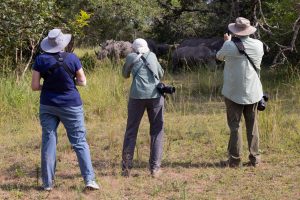 tracking of the southern White Rhino, which were declared extinct in Uganda by 1983. Later. This is the only place in Uganda where you can find Rhinos in the wild. On the walk, you will learn how to follow the Rhino tracks through the wilderness, literally walking in their footsteps. This is a thrilling experience; all your senses will be on alert, and every sight, sound, and scent will be magnified.
Along with the Rhinos, there is other wildlife that roams this sanctuary. They include animals such as: Baboons, Velvet Monkeys, Warthogs, Black and White Colobus monkeys, Uganda Kob, Waterbucks, Bush backs, Hippos, Pangolins, Mongooses. After Tracking Rhinos at Ziwa we shall have lunch at Kabalega Dinners
This is the only place in Uganda where you can find Rhinos in the wild. Along with the Rhinos, there are other wildlife that roam this sanctuary. They include animals such as: Bushbuck, Olive Baboons, Velvet Monkeys, Warthogs, Black and White Columbus monkeys, Uganda Kob, Waterbucks, Bush backs, Hippos, Pangolins, Mongoose, snakes
Transfer to Kibale National Park with stop over en-route for lunch at the selected Tourist Hotel/Restuarant, then after Lunch
Transfer to Kibale Forest National Park & Birding En-route
Transfer to Kibale National Park, shortly after arriving at your accommodation we shall check in and have lunch and proceed to Kanyanchu the visitor center in Kibale National Park for the briefing Kibale is famous for Uganda Red Colobus which are threatened in this region for being preyed on by Common Chimpanzee the Uganda Mangabey, Olive Baboon, Mantled Guereza, L’Hoest’s and Blue Monkey are also very likely to show up
Birding experience in kibale National Park is excellent, you will be able to see and photography many of the birds in this area. Birding at the Lodge is excellent with Great Blue Turaco: Often considered the main draw, this striking bird is commonly seen in pairs as it moves through the tree
The time we should spend in the forest looking for the Pitta, we will also look for Crested Guineafowl, Western Black-headed Oriole, Blue-breasted Kingfisher, Blue-throated Roller, Black bee-eater
Day 7 (Nov 14, 2027)
Chimpanzee Tracking in Kibale National Park
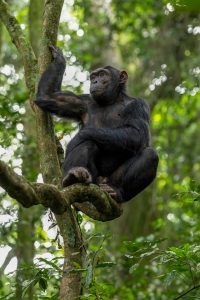 After early morning breakfast at the lodge drive to Kanyanchu Visitor center for proper briefing and registration to get set for this ritual. Kibale National Park is the best travel destination for chimpanzee tracking in East Africa and can best be defined as the loveliest and most varied of all tropical rain forests in Uganda. It is christened the primate capital of the world because it hosts 13 species of primates, including the chimpanzee. It has 1450 chimpanzees, and these represent Uganda’s largest population of this endangered primate species.
Chimp trekking runs twice daily, at 8 AM and 2 PM. The habituated chimp community here is very relaxed, and sightings are often excellent, but you might find that several trekking parties converge on one chimp group. For this reason, Kibale can feel crowded compared to other chimp trekking sites, especially in the morning (which is busier than the afternoon)
In this forest, you will look for the Chimps and also do an early start for the Green-breasted Pitta. This Pitta is one of Africa’s most difficult birds to find!
Kibale is one of the best places in Africa to see a diversity of primates. Chimps are the biggest attraction, but large troops of olive baboons often pose along the main road, and the fringing trees shake with red-tailed monkeys, black-and-white colobus, Ugandan red colobus, and Uganda mangabey. Less common are L’Hoest’s monkey and blue monkey. Elephants, buffalo, leopard and lion inhabit or occasionally visit Kibale (which shares a border with Queen Elizabeth National Park), but sightings are unusual.
In this forest, you will look for the Chimps and also do an early start for the Green-breasted Pitta. This Pitta is one of Africa’s most difficult birds to find! While we spend time in the forest looking for the Pitta, we will also look for the world-famous Kibale National Park. Renowned as ‘The Primate Capital of the World’ for its incredible primate population – 1450 individual chimpanzees and 13 species of primates overall, but the best part is that it holds an impressive bird list of 335 species! In this forest, you will look for the Chimps and also do an early start for the Green-breasted Pitta. This Pitta is one of Africa’s most difficult birds to find!
Birding in Kibale National Park
While we spend time in the forest looking for the Pitta, we will also look for Crested Guineafowl, Western Black-headed Oriole, Blue-breasted Kingfisher, Blue-throated Roller, and Black bee-eater. The time we should spend in the forest looking for the Pitta, we will also look for White-throated Greenbul, Crowned Eagle, Thick-billed Honeyguide, Brown-chested and Fire-crested Alethe, Crested Guineafowl, Western Black-headed Oriole, Blue-breasted Kingfisher, Blue-throated Roller, Yellow-browed Camaroptera, Blue Malkhoa, Brown-eared Woodpecker, Western Nicator, Dusky Long-tailed Cuckoo, Bronze-napped Pigeon, Yellow-mantled Weaver, Lesser Honeyguide, Red-chested Owlet and African Wood-owl among others.
At the world-famous Kibale National Park. Renowned as ‘The Primate Capital of the World’ for its incredible primate population – 1450 individual chimpanzees and 13 species of primates overall, but the best part is that it holds an impressive bird list of 335 species! In the morning, we’ll be on the lookout for species such as the Shining Blue Kingfisher, Blue- breasted Kingfisher, White-browed Robin-chat, Red-chested Sunbird, White-Headed Saw-wing, Tawny-flanked Prinia, Black Bee-Eater, Blue Malkoha, White-chinned Prinia, Speckled Pigeon, Green-breasted Pitta, African Pitta, Abyssinian Groundthrush, Dusky Crimsonwing, Black-capped Apalis, Collared Apalis, Purple- breasted Sunbird to a name a few!
Once contact is made, you can spend an hour observing their behaviour, with your trekking guides providing more context on what you are seeing and how the chimps behave! Here you will be able to take nice photos of chimpanzees.
Day 8 (Nov 15, 2027)
Transfer to Queen Elizabeth National Park
After breakfast, we shall transfer to Queen Elizabeth National Park. Enjoy the seventy-two huge round basins scattered across the equator, evidence of the Albertine Rift’s bubbling volcanic past. Visit the Queen’s Pavilion, with views of the enormous craters, circular lakes, the rift valley, and the escarpment, all in front of the mighty backdrop of the Rwenzori Mountains, to Kasese town. Set against the backdrop of the serrated Rwenzori Mountains, you enjoy the beautiful scenery, with virtually guaranteed herds of Buffalo, Elephants, and Antelopes. Afterwards, drive back to the lodge for lunch. This scenic view will be punctuated and combined with spectacular landscape and views of the Rwenzori ranges.
Day 8 (Nov 15, 2027)
Morning Boat Cruise on Kazinga Channel in Queen Elizabeth National Park
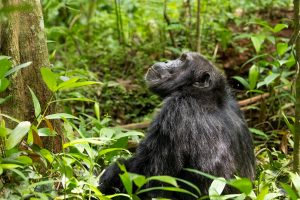 After lunch, you will do an afternoon boat ride on the Kazinga Channel. This 40 km natural channel connects two major lakes in this park: Lake George and Lake Edward. Because of the significant wildlife activity at the banks of the channel, we only cover less than 4 km, and this takes us to Lake Edward for a turning point. This boat ride typically targets congregations of birds and big mammals, including tailed and Black-shouldered Nightjars
Enjoy the seventy-two huge round basins scattered across the equator, evidence of the Albertine Rift, bubbling volcanic past. Visit the Queen’s Pavilion, and face the enormous craters, circular lakes, the rift valley, and the escarpment all in front of the mighty backdrop of the Rwenzori Mountains to Kasese town. Set against the backdrop of the serrated Rwenzori Mountains, you enjoy the beautiful scenery, virtually guaranteed herds of Buffalo, Elephants, and Antelopes. Afterwards, drive back to the lodge for lunch. This scenic view will be punctuated by spectacular landscape and views of the Rwenzori ranges.
Day 9 (Nov 16, 2027)
Morning Game Drive in Queen Elizabeth National Park
After breakfast at the Lodge, we shall drive to Kasenyi for the morning game drive! We shall drive to Kasenyi Plains, as you can enjoy the morning game drive for the best morning catch of game in this understandably Uganda’s most popular tourist destination. On this second game drive
Queen Elizabeth National Park is Uganda’s most popular savannah reserve and has the widest variety of wildlife of any Ugandan park. The variety of habitats includes grassland savannah, forests, wetlands and lakes. This provides the setting for an extensive range of large mammals and primates. Four of the Big Five are present (rhinos are absent). The time spent in this truly incredible park will be one that is not forgotten in a hurry! Plains of Kasenyi, the northern part of Queen Elizabeth National Park, the medley of wonders and the vast savannah of Africa is the perfect setting for a classic African safari experience. With breathtaking and majestic scenery across the entire mountain spectrum.
Afternoon Chimpanzee Tracking in Kyambura Gorge
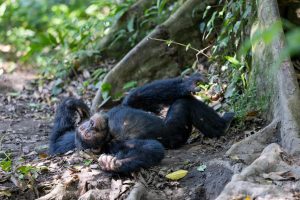 After lunch, we shall drive to Kyambura Gorge. Two treks take place every day in Kyambura Gorge and Queen Elizabeth National Park, one in the morning and one in the afternoon. The terrain of the forest is not too challenging, particularly in comparison to the often-gruelling terrain of gorilla trekking in Bwindi Impenetrable National Park. This makes the trekking more comfortable and more accessible for those who aren’t up for difficult hiking.
The trek starts with a briefing from the park rangers. They’ll talk you through the route you’ll be taking, the safety precautions, and explain more about the chimps and their behaviour in the wild.
You will then head off into the forest in search of a habituated group of chimps; these are chimps that are accustomed to human presence. These groups tend not to retreat too deeply into the underground forest, and the Kyambura River flows through. Once contact is made, you can spend an hour observing their behaviour, with your trekking guides providing more context on what you are seeing and how the chimps behave! Here you will be able to take nice photos of chimpanzees.
Day 10 (Nov 17, 2027)
Transfer to Bwindi Impenetrable National Park via Ishasha, the southern remote sector of Queen Elizabeth National Park
After breakfast, we shall transfer to Bwindi Impenetrable National Park via Ishasha. Normally at this time of the trip, the desire to see the big game will be high; you will have good chances for African Bush Elephants, leopards, and the tree-climbing lions of the remote Ishasha, the southern sector of Queen Elizabeth National Park. The experience here is great. Driving here is long, but full of scenic attractions, arriving in the evening to check in at the lodge. The plains of Ishasha in Queen Elizabeth National Park, a medley of wonders and the vast savannah of Africa, are the perfect setting for a classic African safari experience. With breathtaking and majestic scenery across the entire mountain spectrum. Visit the vast open spaces full of oddities and secrets that are an elastic thread of Natural wonders, where we shall begin our safari into the African wilderness the way Nature intended, to see the wild residents emerge for a drink from the busy waterhole as the sun begins to rise over the iconic bush veld scenery. It will be the one that will engage all our senses from the very first moment Sparked to life when we first hear the distant roar of a lion, the laugh of a hyena in the morning, or the song of a thousands of cicada beetles at midday, then experience the high lightening of these sense when we first spot a rare leopard hidden in a tree or feel the ground vibrate as a herd of elephants cross right in front of us, or hear the gentle and peaceful antelopes the Uganda Kobs as they whistle in alerting the other group members with their well painted-hears about the suspicion that the enemy could be watching their movement. Soon we shall feel that this world moves at its own speed, and to witness it be part of it is something you won’t forget.
Coming this close to nature is a vivid reminder of why we have always been inspired by the untouched wild. Photograph the attractions a poetry wrapped in beauty. Explore and witness the miracles of the dry landscapes, fertile valleys, drive to river Ishasha where we shall see the plentiful of hippos resting in the waters as they lean on each other, witness these wildlife enjoy breathtaking experience, stop somewhere at the designated point for your picnic lunch before proceeding with our evening game drive where we expect to see evening wipes as the animals becomes active to graze in this open savannah grassland expected to be seen includes, Herds of huge dark Elephants, several herds of African Buffalo, Lions resting up on the fig trees, Leopards, Uganda Kobs, Spotted Hyenas, Waterbucks, Warthogs, Topis and many others. We shall explore all the wildlife spotlight areas of Ishasha’s best Safari as you drive to the connect to the northern part of Queen Elizabeth National Park
The Area can be an excellent spot for, Common Waxbill, Grey-crowned Crane, Variable Sunbird, Thick-billed Seed-eater and we shall stop to look for Doherty’s Bush-shrike and Barred Long-tailed Cuckoo to Handsome francolin, Black bee eater, add to our new birds of the day. The L’Hoest’s and Blue Monkeys are among the new primates we should find for our continuously growing mammal list, drive through RKatungurui-Ishasha-Kihiihi-Butogota-Ruhiija. This drive is long but rewarding enjoy your journey while driving on the winding snake-like roads that shyly pass at the lips of the cliffs, and primates along the way and provide expansive views across the plains of Western Rift Valley to the west, drive through tea plantations and proceed to Bwindi Impenetrable National park with stopover for the best photographs along the way you will drive through the Impenetrable forest before connecting to the open plains at the extreme end of the rift valley wall.
Day 11 (Nov 18, 2027)
Gorilla Trekking in Bwindi Impenetrable National Park Uganda
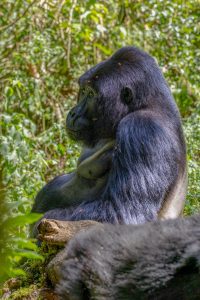 After early morning breakfast drive to the briefing point with your packed lunch, this is usually a big day, we anticipate for the big one! Mountain gorilla trekking is such a highlight even on birding tours. After breakfast, you will go to the information office for a proper briefing on how to behave amidst Mountain Gorillas and family allocation.
This activity may take anywhere between an hour and eight, so a reasonable degree of fitness is required. It is a beautiful experience to stare into the eyes of these gentle giants; watch them in awe as they play and go about their daily activities. It is indeed a “once in a lifetime” experience that will linger. Each encounter is different and has its rewards, but you are likely to enjoy the close view of adults feeding, grooming and resting as the young frolic and swing from vines in a delightfully playful display.
The Park gives you an opportunity to discover the secrets in these mist and fog-covered hillsides, which are blanketed by one of Uganda’s oldest and most biologically diverse rainforests for gorilla tracking. It is a humbling experience to stand just meters from them as they eat, rest, play, and bond with their young ones. The gorilla tracking starts at 8:30 am. The tracking lasts from few hours, depending on the location of the gorillas as they freely range in the impenetrable forest and tours are limited to only 8 people per group.
Afternoon Visit to the Pygmy (Batwa Community) in Bwindi Impenetrable National Park
After a successful gorilla tracking experience, we shall return to the lodge, relax, enjoy the clear view of Bwindi Forest…have a cup of tea, and then we shall go for a Batwa Community experience
Visit the Batwa pygmies. Bwindi’s dense forests were home to the indigenous Batwa: hunters, gatherers, and fierce warriors who depended on the forest for shelter, food, and medicine. When the national park was established, the Batwa were evicted from the forest and abandoned their low-impact, nomadic lifestyle. Here you discover the magic of the Batwa’s ancient home while enjoying nature walks and learning about the cultural heritage. The Batwa demonstrate hunting techniques, gather honey, point out medicinal plants, and demonstrate how to make handicrafts. Visit Batwa men and women, where women of the community perform sorrowful songs that echo eerily around, and this will leave you with a moving sense of the richness of this fading culture
Day 12 (Nov 19, 2027)
Birding in Bwindi Impenetrable National Park
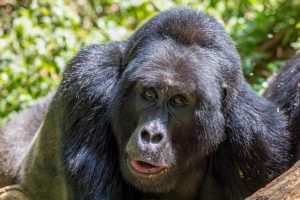 The Park allows you to discover the secrets in these mist- and fog-covered hillsides, which are blanketed by one of Uganda’s oldest and most biologically diverse rainforests, and offers gorilla tracking. It is a humbling experience to stand just meters from them as they eat, rest, play, and bond with their young ones. The gorilla tracking starts at 8:30 am. The tracking lasts for a few hours, depending on the location of the gorillas as they freely range in the impenetrable forest, and tours are limited to only 8 people per group. See some special monkeys here: black-and-white colobus monkey, Red-tailed monkey, L’Hoest’s monkey, gray-cheeked mangabey
When done with the gorilla tracking activity, there is a high chance that you will be happy to go out for more restricted-range and Albertine Rift endemics. In this case, you will do a leisurely walk to the community secondary forest. You will look for Barred and Olive Long-tailed Cuckoos, Grauer’s Warbler, Black-tailed oriole, the very skittish Luhder’s Bush-shrike while they make their way through the vines, Gray Cuckoo-shrikes, we’ll be searching for rare Albertine endemic species as well as looking for beautiful forest species such as the Regal Sunbird, Northern Double-collared Sunbird, Ludhers Bush-shrike, Petits cuckoo-shrike, Bar-tailed Tragon, White-tailed crested-flycatcher, Purple-breasted Sunbird, Collared Apalis, Elliot’s Woodpecker, Purple-throated Cuckooshrike, Graure’s Broadbill, Handsome Francolin, Strange Weaver, Shelley’s Crimsonwing, Dusky Crimsonwing, Stripe-breasted Tit, Rwenzori Batis,
roller enjoy the breath taking scenery of the green terraced hills and snake like roads of this Region, the drive along this route is amazing and impressive by the remarkable scenery that unfolds in sight. The terraced hills gradually give way to the cascading hills that seem never to end on these snake like roads which will definitely impress you as you drive through this region of Kigezi You also enjoy the cold interior with spectacular Tea Plantations could also be good spot for birding.
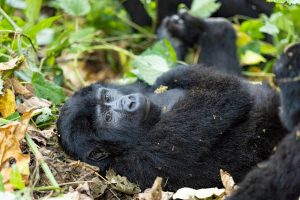 Bwindi Impenetrable National Park, which is famously known as Africa’s number one birding spot. Sometimes, the Grey-capped Warbler, Dusky-brown Flycatcher, White-necked Raven, and Straw-colored Fruit Bats around the parking lot attract your attention. Driving through this beautiful forested area is a special count, you will possibly see the huge-billed White-necked Raven; this is a cool-looking raven for sure; they have this very huge and thick-looking bill on your way to Bwindi Impenetrable, you can possibly do a few stops to look for Albertine Sooty Boubou, Rwenzori and Black-faced Apalises. We also hope to get better looks at the Mountain Yellow Warbler, Banded Prinia individuals as they skulk in the undergrowth, White-browed Crombec, Brown-capped and the endemic Strange Weaver, Northern Puff-back, Mountain Illadopsis, Red-throated Alethe, Doherty’s and Lagden’s Bush-shrikes, and many more to enrich our list of endemics, Common Waxbill, Grey-crowned Crane. When we enter Bwindi Impenetrable Forest, we shall stop to look for Doherty’s Bush-shrike and Barred Long-tailed Cuckoo to add to the list.
Transfer to Lake Mburo National Park
After lunch, we shall drive to Lake Mburo National Park, the dry savannah area in the dry cattle corridor; the landscape here is scenic, and the experience is great
Day 13 (Nov 20, 2027)
Morning Game Drive in Lake Mburo National Park
After breakfast, drive to the park for excellent wildlife photographs and the compact jewel. There is well-presented wildlife at only 370Kms2. The park is small compared to other savanna national parks in Uganda. Being home to surprising wildlife such as Impalas, waterbuck, bushbuck, warthogs, baboons, vervet monkeys, Common Elands, Zebras, Topis, Buffaloes, and klipspringers, we shall concentrate on the water holes and dams within the park! This park can become dry during this season, and many colorful birds such as black-headed gonolek, grey-headed kingfishers, and many others, and the only national park in Uganda that has Impalas, you enjoy the beauty of these whispers of the wild. After the game drive, return to the lodge for lunch.
Morning Game Drive in Lake Mburo National Park
After breakfast, drive to the park for excellent wildlife photographs and the compact jewel. There is well-presented wildlife at only 370Kms2. The park is small compared to other savanna national parks in Uganda. Being home to surprising wildlife such as Impalas, waterbuck, bushbuck, warthogs, baboons, vervet monkeys, Common Elands, Zebras, Topis, Buffaloes, and klipspringers, we shall concentrate on the water holes and dams within the park! This park can become dry during this season, and many colorful birds such as black-headed gonolek, grey-headed kingfishers and may others, and the only national park in Uganda that has Impalas, you enjoy the beauty of these whispers of the wild. After the game drive, return to the lodge for lunch.
The boat moves along the shores of Lake Mburo as you sit back, ready with your camera to photograph the gifted wildlife. This trip is two hours and very engaging, especially when you spot Crocodiles and Hippos. You can also spot herons, African Fish Eagles, Pelicans, and perhaps the African Fin Foot, and enjoy leisurely boat cruises on Lake Mburo. Species to look forward to are the White-backed Night-Heron, African Finfoot, African Fish Eagle, Striated Heron, Purple Heron, Grey Heron, Common Squacco Heron, Pied Kingfisher, Palm-nut Vulture, Black Crake, White-faced Whistling Duck, Knobbed-billed Duck, Spur-winged Goose, Red-faced Barbet, Black-collared Barbet, Crested Barbet, Long-tailed Cisticola and Brubru, among many others.
After wards, proceed for the evening game drive will give you an opportunity to explore and photograph the attractions of this whispers of the wild in its natural state for the best memorable eye to eye wildlife in Uganda, birding experience is great where you will be able to see birds such as African hoopoe, Black-headed gonolek, Veraux Eagle Owl, Saddle-billed stork, Greater blue-eared starling, double-toothed barbet, Hammerkop and the sunset here is perfect
Boat Cruise in Lake Mburo National Park
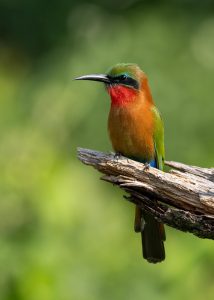 The boat moves along the shores of Lake Mburo as you sit back, ready with your camera to photograph the gifted wildlife. This trip is two hours and very engaging, especially when you spot Crocodiles and Hippos. You can also spot herons, African Fish Eagles, Pelicans, and perhaps the African Fin Foot and the Shoebill, the sought-after bird by birdwatchers. Afterwards, proceed for the late evening game drive will allow you to explore and photograph the attractions of this whispers of the wild in its natural state for the best memorable eye to eye wildlife in Uganda, birding experience is great where you will be able to see birds such as African hoopoe, Black-headed gonolek, Veraux Eagle Owl, Saddle-billed stork, Greater blue-eared starling, double-toothed barbet, Hammerko.
After Boat Cruise enjoy game drive for the best photography opportunities in search for big herds of elands, buffaloes, zebras, giraffes, warthogs, baboon and best scenic view rapped in the rocky outcrop, acacia woodland, savannah and perfect birding experience and colorful birds, displaying and posing for the photos this allows us to explore and photograph the attractions of this whispers of the wild in its natural state for the best memorable eye to eye wildlife in Uganda
Evening Game Drive in Lake Mburo National Park
Game drive for the best wildlife safari experience and photography in this sculpted landscape, rolling hills, rock outcrops, and open wooded savanna. The expected animals include: Zebras, Impalas, Elands, Topis, Giraffes, Waterbucks, Klipspringers, Velvet Monkeys, Buffalos, Warthogs, Baboons, and several bird species. This park alone has 332 known bird species and 69 species of mammals.
Day 14 (Nov 21, 2027)
Transfer to Mabamba Bay Swamp
After breakfast, we shall transfer to Mabamba Bay with a stopover for a water experiment at the Equator Crossing Line at Kayabwe
Here at the Equator, where a few experiments will be done, some of which include: stepping one foot in the southern hemisphere and another foot in the northern hemisphere; then we repeat the water experiment. As you drive through this region, you will be amazed and impressed by the remarkable scenery that unfolds in sight, with a stopover for Lunch at Flamingo Restaurant at the Equator
Exciting Shoebill Photography at Mabamba Swamp
We shall drive to Mabamba. It is a beautiful papyrus swamp located near Lake Victoria and, luckily, is only a short drive away from Entebbe. It’s one of the very best places in the world to see the incredible and prehistoric Shoebill – one for any birder’s wish list! It truly is a sight to behold that won’t be forgotten quickly.
This is a must for any birder who has one day or even half a day to spare. We kick off our very first day of this Uganda Birding Tour at a Papyrus Swamp for a good chance of seeing the elusive Shoebill. We’ll also be on the lookout for any other interesting species such as the Papyrus Gonolek, Yellow-billed Duck, Common Greenshank, White-winged Warbler, Swamp Flycatcher, African Jacana, Lesser Jacana, Blue-breasted Bee-eater, Malachite Kingfisher, Carruther’s Cisticola, African Green Pigeon, Bronze Mannikin to name a few!
Day 15 (Nov 22, 2027)
Early Morning Shoebill Photography Safari at Mabamba Bay Swamp
After early morning breakfast at the Hotel, we shall drive to Mabamba. It is a beautiful papyrus swamp located near Lake Victoria and, luckily, is only a short drive away from Entebbe
It’s one of the very best places in the world to see the incredible and prehistoric Shoebill – one for any birder’s wish list! It truly is a sight to behold that won’t be forgotten quickly. This exquisite habitat is also home to stunning species such as the Papyrus Gonolek, Blue-breasted Bee-eater, White-throated Bee-eater, Northern Brown-throated Weaver, Red-chested Sunbird, African Jacana, Lesser Jacana, Malachite Kingfisher, Black Crake and Swamp Flycatcher, among many, many more!
We shall drive back to the Lodge for hot Lunch before driving to cross with the ferry to head to Entebbe International Airport.
Trip Cost: $10,500.00
Deposit (non-refundable): $3,000 payable by check or money order due at time of registration. Registration by email (see Cancellations and refunds below). The remaining balance of $7,500 is due 90 days before departure, payable by check or money order.
Single supplement: $0.00 (included).
Digital payments carry a processing fee of 3%.
Participant Limit: 3 participants (or 6 with a 2nd vehicle)
Physical Level: Easy, except for chimpanzee and gorilla treks. The distance and elevation change according to where they roam in the forest. In general, I would say that the chimpanzee trek ranges from easy to moderate, and the gorilla treks range from moderate to hard. All treks are optional.
What is included:
- Lodging
- Meals as listed
- Transportation during the workshop, including the airport shuttles on the first and last day
- In-the-field photography instructions
What is not included:
- Flights
- Meals not covered on the 1st and last day (No meals on the 1st travel day. Lunch and dinner are not covered on the last day.)
- Beverages (Alcoholic, soft drinks, and special-order drinks. Coffee, tea, and juices served with meals are typically included.)
- Personal items (snacks, souvenirs, laundry service, etc.)
- Tips/Gratuities for guides, bus driver, wait staff, etc.
Register/Questions, please use our Contact Form by clicking here! —> Contact Form.
(Notify us by email that you want to attend. If we have room, we will give you payment information.)